


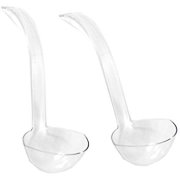
There are various sources around the internet advising fellow jellykeepers that it’s okay to use their hands to remove jellyfish from their tanks… Please don’t do this. Use a ladle or small plastic cup.

Jellyfish must be completely submerged in water at all times. No matter what.
You shouldn’t do this for a couple of reasons:
- When scooping jellyfish out of water with your hands, you can’t stop the water from escaping through your fingers. This leaves your jellyfish completely exposed to air. Exposing jellyfish to air will allow air bubbles to become trapped inside their mouths and stomachs. Yes, moon jellyfish are considered “hardier” than most jellyfish species, but air bubbles are trouble to all jellyfish. Yes, you can surely burp these bubbles out of them, but again, this causes more trouble to your jellyfish doing this over and over. If a bubble travels too far into a jellyfish’s stomach, it can cause them to float towards the top and will eventually make it’s way out even if it means breaking through the jelly’s bell.
- You will also cause damage to their body shape immediately. Since jellyfish are 96% water and have no bones or internal structure, they rely on the water around them to support their body. Once they are taken out of water, their mesoglea (a.k.a. the “jelly” to jellyfish) becomes heavy water weight with gravity pulling their bodies down. This will cause small tears and rips internally to their nerves and tissue while also be detrimental to their bell shape.
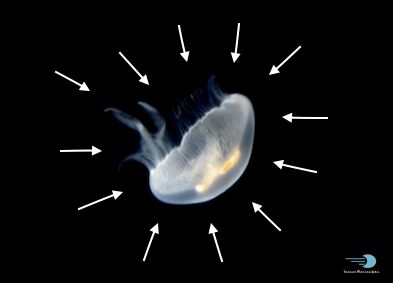
When moving jellyfish from out of your tank or from one body of water to another, please always use a ladle, cup, or bowl to keep your jellies submerged under water the entire time. Although their sting is not strong enough to penetrate through human skin, it’s simply not wise to use your hands as a transportation device and to take any marine animal out of the water.
There are a number of different sized ladles and cups available online today, so finding one to perfectly fit the opening of your tank or the size of your jellies should be easy!


TIP: We recommend the use of small 6-8 oz yogurt cups. We have a small collection that we use here in the lab and find them very helpful for small situations!
Watch our video below to see how you can move your jellies (while keeping them fully submerged) using a ladle or a small cup/bowl.

 moon jellyfish blog
I will definitely be sure to keep my jellyfish completely submerged when moving them.
LikeLike
HI Hallie,
Ocean currents are responsible for the jellyfish landing on the beach. You may be seeing more this year because there probably was a bloom recently. And, yes….warm waters can generate blooms. So, if you combine those two events and the blooms coincide with the currents changing during the seasons, you will have jellies landing on the beach more some years verses others.
LikeLike
I keep seeing on various sites that “moon jellyfish don’t sting humans”. I’ve been stung plenty of times by moon jellyfish. The sting is mild compared to other jellies of course, but it’s a sting never the less. Just wondering if you could clear this up? Thanks!
LikeLike
Hi Hallie,
Moon jellies do sting- it’s just that their stinging cells are so small most people don’t feel it , and therefore assume they don’t sting.
LikeLike
Thanks for clearing that up. It definitely feels like brushing up against a stinging nettle plant in my opinion. Crazy that some people don’t feel it! One more question you may have the answer to. What make an abundance of jellyfish come to the shore? I’ve read that it’s warmer temperature, but the weather is no warmer than normal in Port Rock Texas this summer. There are tons of moon jellies on the beach and in very shallow water. There haven’t been this many in several years. Do they go through a cycle of some kind?
LikeLike